Thursday, 5 December 2013

Lecture notes - Lisa Barnard

Lisa Barnard mainly told us about a project she did in America called 'Blue Star Moms', which involved her taking photos of care packages these mothers send to their children who are fighting in Iraq. She noted the relation to her photos and object fetishism and symbolism, suggesting that the objects she photographs represent the labour force. I found the care packages really interesting. It's fascinating to see what people are sending, and it shows aspects of the soldier's personalities. Below are some examples.


This lecture helped me to further my own ideas, as I began to wonder whether I would take portraiture photos or object photos that relate to child innocence. Her care package photos really interested me, but looking back I realised the main interest lies in the background story of the images. The fact that these items are going to a place of war suggests that these items are going to be treasured, and provide small home comforts, such as tea bags and sweets. 

My notes (the image below) show scribbles of me thinking about taking a photo of a playground, and asking myself whether to take photos of children or objects. 


Whilst researching Barnard, I've found another project she's done on excema. Her subject is a young boy, similar age to my nephew. There isn't much information on the project, but I suppose it's quite self-explanatory. She has photographed this little boy whilst in the midst of his excema, showing the pain of his skin condition.


The boy is clearly in so much pain that wearing clothes irritates his skin. Every photo shows him pressing his skin up against something cold, which reinforces the idea of the pain he feels, as well as the low saturation of the photos. 
These images relate quite well to my project, as I initially had the idea of taking photos of chicken pox, as part of my child innocence project, however unfortunately my nephew has already had chicken pox. He has however always had sensitive skin, so much so that even using a different washing detergent will irritate his skin. Maybe I will be able to take photos of him like that, which would overcome my issue of him not having chicken pox anymore (thank god!). 


Lecture notes - Hugh Ballantyne

Hugh Ballantyne introduced himself as a producer/director of factual TV during the lecture, however after going on his website and doing some research, I've realised he does much more than that. Although he does mostly focus on short films/episodes of factual TV, he also takes photographs. His photographs don't really relate directly to my project, as they are very bold, colourful and he doesn't take many portraits. 
I do really like his 'texture' photographs, as I've always liked macro photography and enjoy looking at different textures up-close. Below are some examples.


I've chosen to include examples of more 'natural' textures, as my project is going to be fairly 'natural' in that I hope to capture my nephew in his own day-to-day life, as opposed to making him pose or look in a certain way deliberately. 
Additionally, I've taken close up images similar to these in the past, so it's clear that I admire close-up photos. Below are some of my past photos.


Sunday, 24 November 2013

Alex Ten Napel

Ten Napel's photos instantly caught my attention. I first found his series of photos of children (almost) submerged in water, which reminded me of my idea of photographing my nephew whilst in the bath. The beauty of the stillness of water, and vulnerability of the children being wet, cold and alone creates a breathtaking still photo.


Sunday, 17 November 2013

'Reasons my son is crying'

I stumbled across this blog (http://www.reasonsmysoniscrying.com) a few months ago and really liked it. It's a father posting images of his son crying, and giving the reason why. The hilarity lies in the reasons for his son crying. I also like the fact that this father is taking photos of his son crying - generally we like to keep happy memories, but I enjoyed the funny twist he has created. The father has now opened up his blog to include entries from other parents. Below are a few examples.

"She wouldn't fit through the doggy door. Note: the open door right next to her."
"I asked him to try strawberry cheese."
"I stuck the stickers he wanted on his face, on his face."
"He met Iron Man... out of costume."


Photographer research thoughts

Many photographers that either deliberately or inadvertantly capture images of children's innocence do so in black and white. To be quite honest, I'm unsure why, but it seems to be the 'trend' (apart from the photos before colour printing). I feel that a children's lives are naturally very colourful, so why photograph them in black and white? 
I've also noticed many photographers use a documentary style when exploring the idea of child innocence. i.e., Cartier-Bresson seems to hide behind the subjects and camera, as opposed to including them in the images. The viewer therefore feels as if they are looking at a photograph, as opposed to 'being' there, being able to relate to the feelings felt when in that moment. Although the lines between portraiture and documentary photography can be blurred, I really want to focus on the portraiture side within my project. I feel that the close-ups I use will help this, but I suppose ultimately it's subjective and up to the viewer how they feel.
Lastly, it seems as if children are photographed in two ways - angelic-like or controversially (such as Sally Mann). The issue with Mann's images is that ultimately, they aren't controversial photographs - the controversy resides in the fact that Mann released these personal family photos to the public. Of course everyone has seen a young child naked, it's all part of the "child innocence" era where no one cares if a child is naked. However, in this day and age, these images are viewed as controversial because of who the images might end up with. 
On the other hand, where children are photographed with wings (see Cameron's work), or made up perfectly (Vlckova's work) is quite frankly unreal. I want to explore child innocence realistically - with jagged fringes, messy mouths, lost teeth, chicken pox, etc. As far as I have researched, I haven't found any photographers that have explored this area of child innocence. 
Yes, children are special, pure, naive and innocent, but they can also be messy, annoying, funny and difficult. I want to capture the light-heartedness of child innocence.

Tereza Vlckova

"She seeks a fine line between fiction and reality. Are all of the twins truly twins or have some been created merely showing an alter-ego of some of the girls? "
The above quote is exactly why I really like Vlckova's project on twins. The mystery of the twins being real or an alter ego is really interesting. The fact that most of the photos are set in magical, outdoor scenes also suggests further mystery into the 'fairytale'.


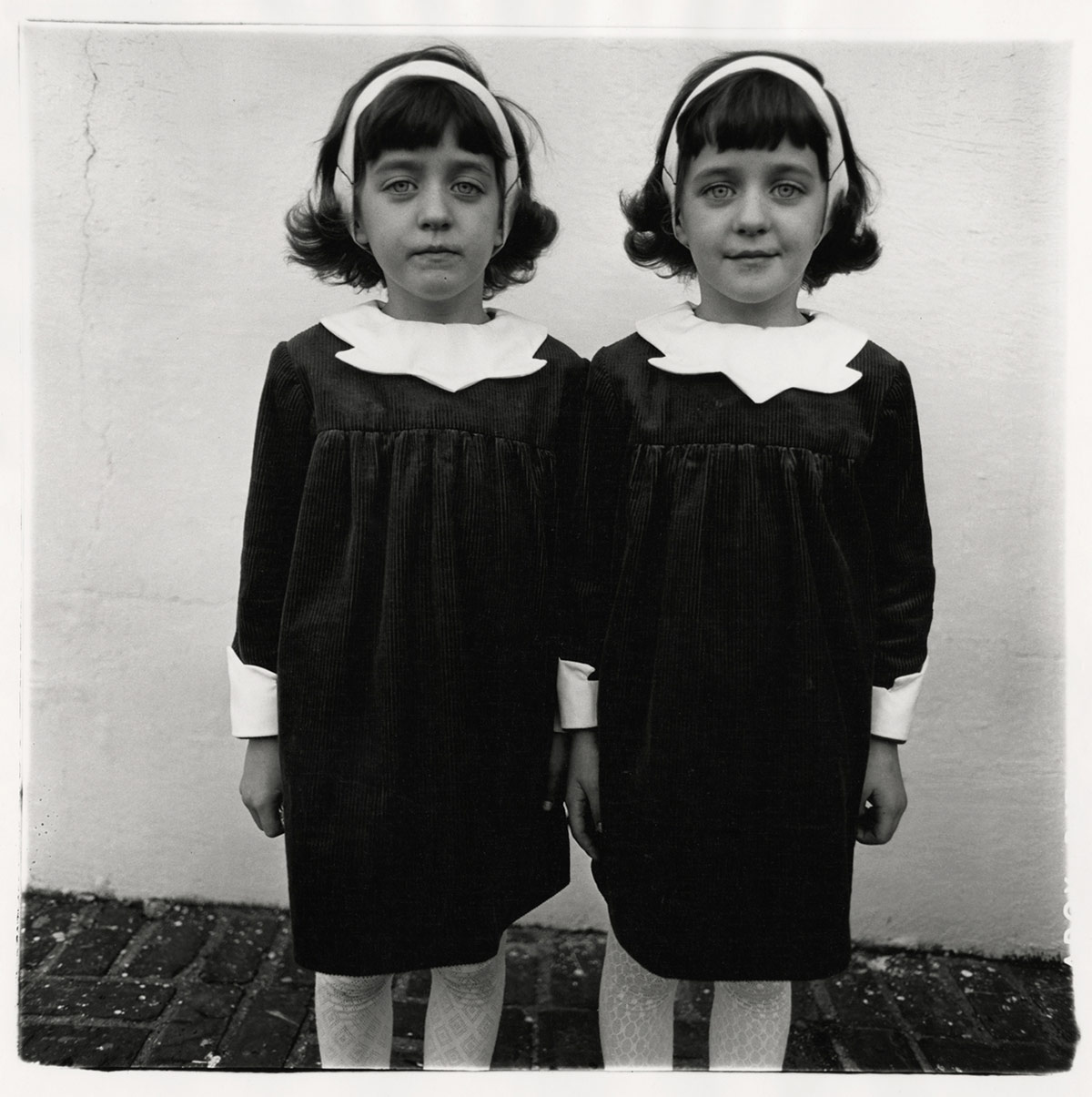
Diane Arbus

Arbus's photos of children closely reflect her projects of the extraordinary. Arbus is well known for photographing different, marginalised people. Her images of children therefore reflect this, as I believe they all contain some element of 'individualism', craziness, oddness, etc.